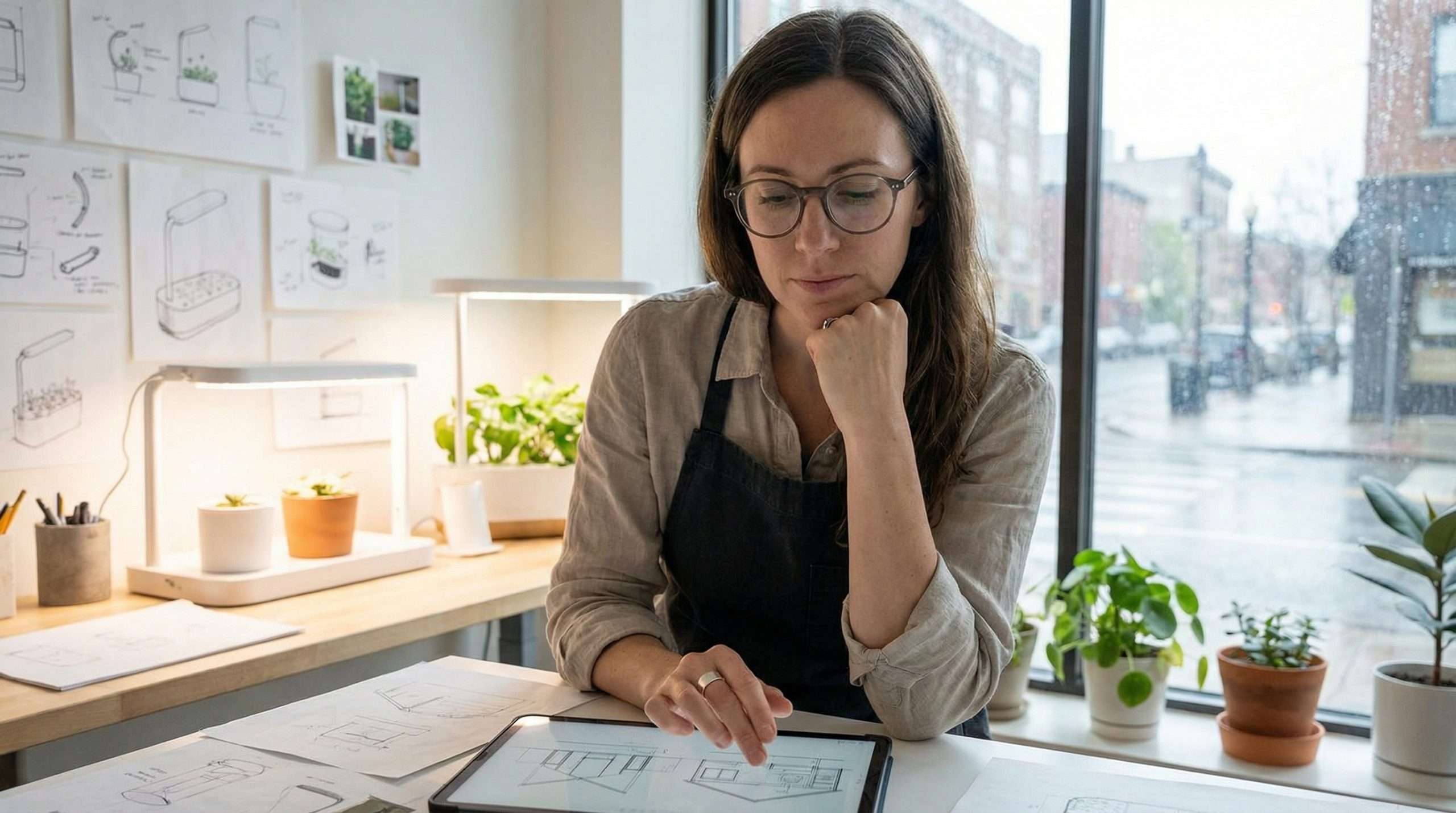
I’ll be honest with you about the tomatoes first.
I grew a tomato plant under a grow light indoors. It lived, it flowered, it even produced fruit — six small tomatoes over four months. I had to pollinate the flowers by hand with a paintbrush, build a makeshift support structure when the plant hit the ceiling, and explain to Marcus why there was a floor lamp pointed at a pot in the corner of the living room for the better part of a year.
The tomatoes were fine. The process was a lot.
For most people with a grow light and a genuine interest in growing food indoors, leafy greens are where the real return is. Lettuce, spinach, arugula, kale — these are the vegetables that grow quickly, harvest repeatedly, and don’t require you to impersonate a bee with a paintbrush.
This is the honest version of what works under a grow light indoors, and what requires more than most home setups can deliver.
The Two Categories of Indoor Vegetables
Everything that grows under a grow light falls into one of two categories, and which category your vegetable lands in determines almost everything about your setup.
Leafy greens and cut-and-come-again crops
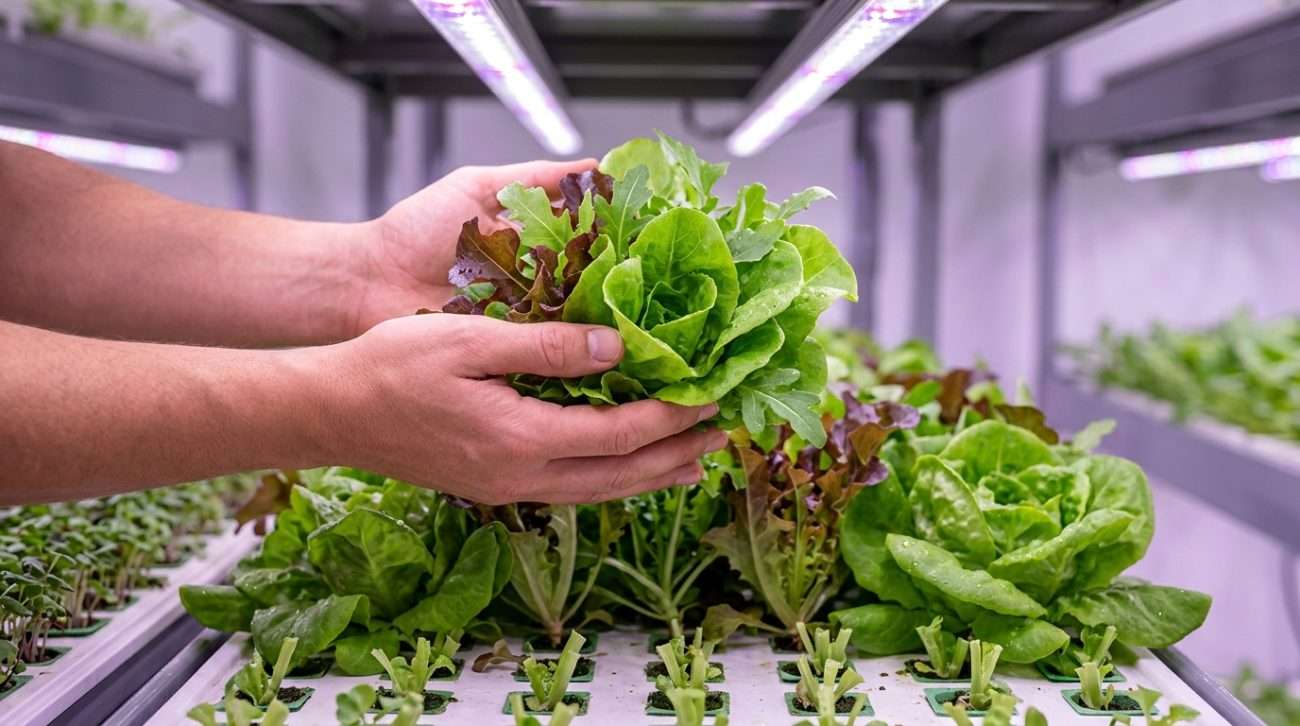
Lettuce, spinach, arugula, kale, Swiss chard, Asian greens, microgreens. These grow fast, stay compact, tolerate the moderate light that a home grow light delivers, and reward you with harvests you can actually use in the kitchen.
They need 300–500 PPFD and 14–16 hours of light per day. A 40–100W grow light covers a standard 2x2ft tray comfortably. The whole setup fits on a kitchen shelf or a corner of a countertop.
This is where an indoor grow light earns its place. Reliably, repeatedly, without drama.
Fruiting vegetables
Tomatoes, peppers, cucumbers, zucchini, beans. These need 600–900 PPFD — roughly double what leafy greens require — plus significant vertical clearance as they grow, and they need pollination that outdoors is handled by wind and insects. Indoors, you handle it yourself.
They’re possible. They’re not the easiest starting point, and the results are less predictable than what you’d get from the same effort applied to leafy greens.
The rest of this guide focuses on both, because you deserve the full picture rather than a promise that everything works equally well.
Growing Leafy Greens Under a Grow Light
This is the setup I’d recommend to almost anyone starting out with indoor vegetable growing.
What grows well
- Lettuce (all varieties) — fast, compact, tolerates moderate light, can be harvested leaf-by-leaf for weeks
- Spinach — slightly slower than lettuce, prefers cooler temperatures, excellent under grow lights
- Arugula — quick to germinate, ready to harvest in 3–4 weeks, slightly spicy flavor intensifies indoors
- Kale — takes longer to reach harvest size but grows steadily and can be stripped of outer leaves repeatedly
- Swiss chard — colorful, productive, handles the light variability in a home setup well
- Asian greens (bok choy, tatsoi, mizuna) — fast-growing, low light requirement, high kitchen utility
- Microgreens — the fastest return of anything you can grow indoors, ready in 7–14 days, no special equipment needed beyond a shallow tray
The setup
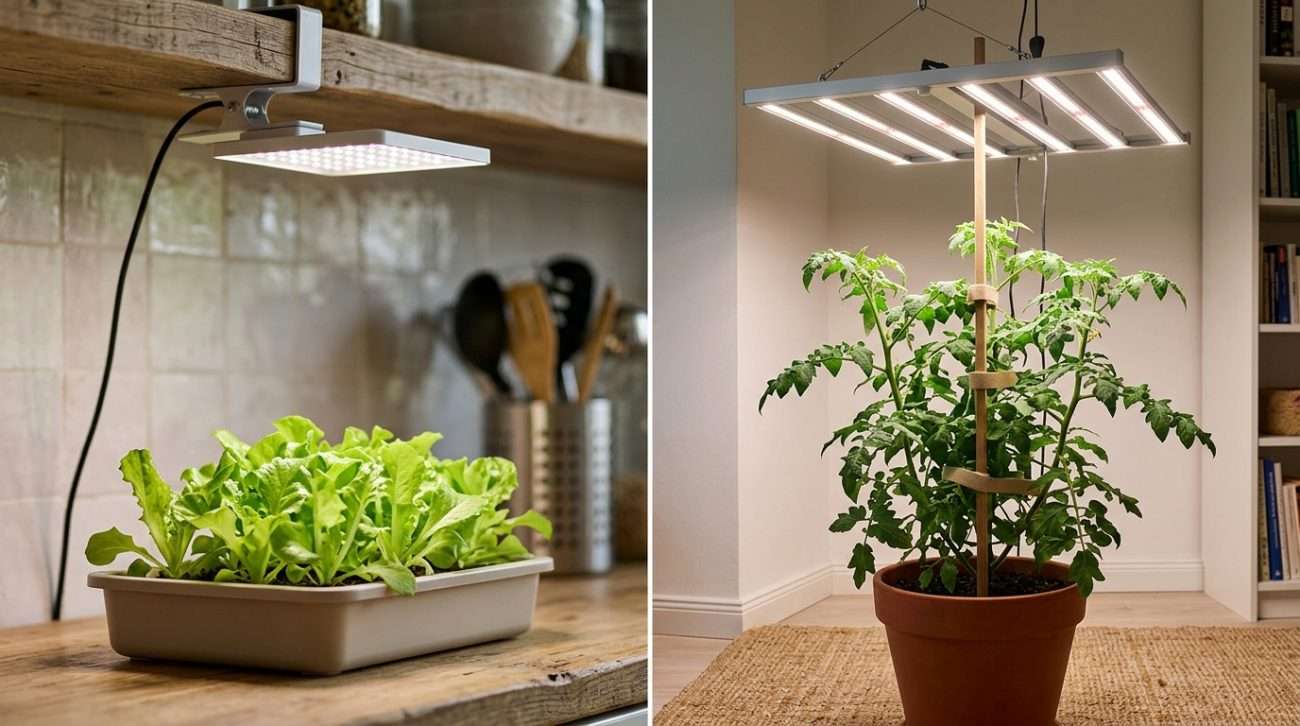
A standard 1020 tray (10×20 inches) fits comfortably on a kitchen shelf or countertop. For that tray size, a 40–60W grow light positioned 12–18 inches above the greens delivers the 300–500 PPFD these crops need.
Set a timer for 14–16 hours on, 8–10 hours off. Plant in a quality potting mix — not seed-starting mix, which is too lean for ongoing growth. Water when the top inch of soil feels dry.
What to expect
Most lettuce varieties are ready for a first harvest within 3–4 weeks of transplanting seedlings, or 5–6 weeks from seed. Cut the outer leaves and leave the center intact — the plant keeps producing for another 4–6 weeks before it bolts (goes to seed and turns bitter).
The harvest from a single 1020 tray won’t replace your grocery shopping. But fresh lettuce, cut 10 minutes before you make a salad, tastes noticeably different from anything that’s been in a refrigerator for a week.
Growing Fruiting Vegetables Under a Grow Light
This section exists because people ask, and the honest answer is worth giving clearly.
Tomatoes
Possible indoors under a grow light. You need a light that delivers 600–900 PPFD at canopy height — that’s toward the higher end of what most home-scale grow lights produce. You need at least 16–18 hours of light per day. You need to pollinate flowers manually: when flowers open, use a small paintbrush or an electric toothbrush (held near the flower, not touching) to transfer pollen.
Compact or dwarf varieties work better than standard ones. ‘Tiny Tim’, ‘Tumbler’, and ‘Patio’ are bred for container growing and stay under 2 feet tall. Standard varieties will keep growing toward the light until you run out of ceiling.
Expect smaller fruit than outdoor-grown tomatoes, a longer time to first harvest (70–90 days from transplant), and more hands-on management than leafy greens require.
Peppers
Similar light requirements to tomatoes (600–900 PPFD), similar pollination needs, but generally more compact plants. Sweet peppers and smaller hot pepper varieties are more manageable than large bell peppers. Growth is slow indoors — expect 3–4 months from transplant to first harvest.
One advantage: peppers tolerate slightly lower light better than tomatoes, which means the edge of your grow light’s coverage area (where PPFD drops) affects them less severely.
Cucumbers and beans
These need more vertical space than most indoor setups accommodate easily. Cucumbers are vining plants that want to climb. Beans — even bush varieties — get large quickly. Both also need pollination. They’re not impossible, but the space requirement makes them impractical for most apartment or kitchen setups.
The honest summary
If you want to grow fruiting vegetables indoors, go in with realistic expectations: more light, more space, more active management, lower yields than outdoor growing. The process is genuinely interesting if you find it interesting. If you’re primarily after fresh food with reasonable effort, leafy greens give you a much better return on the same investment.
Light Requirements by Vegetable Type
The most common setup mistake is using the same light settings for everything. Here’s what each category actually needs:
Leafy greens and herbs
- PPFD: 300–500 μmol/m²/s
- Light hours: 14–16 per day
- Hang height (40–60W light): 12–18 inches above canopy
- Coverage: 40–60W covers a 2x2ft tray adequately
Fruiting vegetables (tomatoes, peppers)
- PPFD: 600–900 μmol/m²/s
- Light hours: 16–18 per day
- Hang height: closer to canopy to maximize intensity — follow the specific product’s recommendation
- Coverage: you need a light that delivers 600+ PPFD across your full growing area, which often means a more powerful light than a typical home herb setup
Seedlings (any vegetable, early stage)
- PPFD: 200–400 μmol/m²/s
- Light hours: 16–18 per day
- Hang height: 4–6 inches above tray — seedlings need bright light close up to prevent stretching
If you’re starting vegetables from seed indoors before transplanting outside, the seedling requirements above apply for the first 4–6 weeks. The seed starting guide covers that process in full.
The Practical Setup for a Home Vegetable Garden
You don’t need a complicated system. The simplest version that actually works:
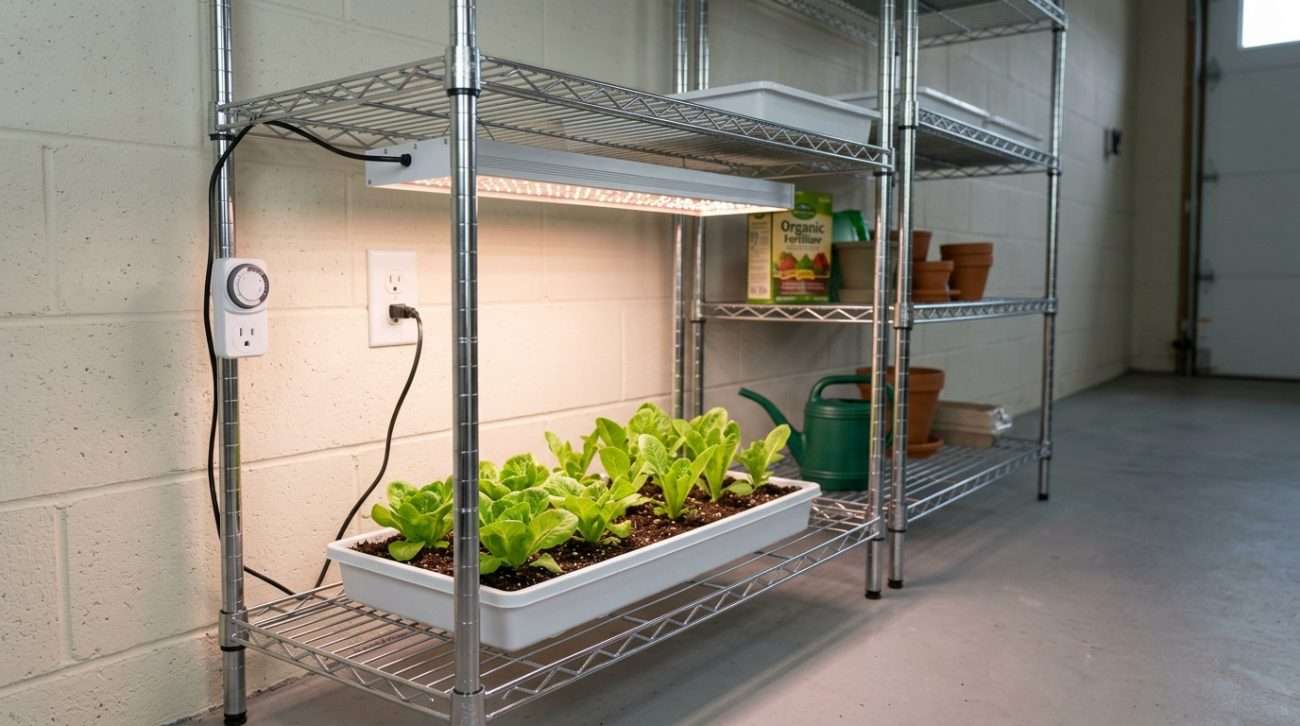
One shelf, one light, one timer.
A wire shelving unit with one or two shelves, a grow light mounted to the shelf above, and a timer set to 14–16 hours. This handles leafy greens from seed to harvest without any other equipment.
The light hangs from the shelf above using the included hardware or simple S-hooks. As plants grow taller, raise the light or lower the shelf. The adjustment takes thirty seconds.
For fruiting vegetables, the same structure works but you’ll need more vertical clearance between shelves — at least 3 feet for tomatoes and peppers, more if you’re growing standard (not dwarf) varieties.
Water, light, timer. That’s the whole system for leafy greens. Everything else is optional.
A quick note on temperature: most vegetables grow best at 65–75°F. Lettuce tolerates cooler (down to 60°F). Tomatoes and peppers slow down below 65°F and struggle below 60°F. If your setup is in a basement or garage, check the temperature before assuming the light is the limiting factor.
Frequently Asked Questions
Can you grow vegetables indoors with a grow light?
Yes — but the results vary significantly by vegetable type. Leafy greens like lettuce, spinach, and kale do very well under a grow light indoors and can be harvested repeatedly. Fruiting vegetables like tomatoes and peppers are possible but require much higher light intensity (600–900 PPFD), more vertical space, and hand pollination indoors. For most home setups, leafy greens and herbs are the most reliable and rewarding crops to grow under artificial light.
How many hours of light do indoor vegetables need?
Leafy greens and most herbs grow well with 14–16 hours of light per day. Fruiting vegetables like tomatoes and peppers need 16–18 hours to compensate for the lower intensity of indoor light compared to full outdoor sun. Always use a timer — consistent daily light cycles matter more than the exact number of hours.
What size grow light do I need for indoor vegetables?
For a small salad green setup (a 2x2ft tray or a few containers), a 40–100W grow light is sufficient. For a more serious indoor vegetable setup covering 3x3ft, you’ll want 100–200W. The key number is PPFD at the plant surface: leafy greens need 300–500 PPFD; fruiting crops need 600–900 PPFD. Check the product’s PPFD data rather than relying on wattage alone.
Do I need a special grow light for vegetables, or will any light work?
Regular LED bulbs don’t work well for vegetable growing — their light spectrum and intensity aren’t optimized for photosynthesis, and the PPFD at plant level is typically far too low. A full spectrum grow light rated for the plant type you’re growing is the right tool. For leafy greens, that’s a modest investment. For fruiting crops, you need a light with higher output.
What’s the easiest vegetable to grow indoors under a grow light?
Lettuce and microgreens. Lettuce is forgiving of slight variations in light intensity, grows quickly, and provides a continuous harvest over several weeks. Microgreens are even faster — most varieties are ready in 7–14 days and require almost no equipment beyond a shallow tray and a light source.
For growing herbs alongside your vegetables — or instead of them — the approach is similar enough that the same light often handles both. The indoor herb garden setup guide covers that combination in detail. And if you’re weighing the full cost of running a grow light year-round, the electricity cost guide has the numbers broken down by wattage.
Ready to grow your own salad greens?
We’ve put together the grow lights that work best for home vegetable setups — with honest notes on what each one covers, and what it doesn’t.
See Vegetable Grow Lights →About the Author
Emma Hartley
Founder of Lumenleaf · Former interior designer (10 years), Portland OR · Started Lumenleaf after spending two weeks researching grow lights for a client’s kitchen herb wall — and discovering that nothing on the market was built for home gardeners.
Read Emma’s full story →